Quality is the foundation for a company's survival.
Building the boron carbide brand, with a strong focus on boron carbide quality.
MORE
Building the boron carbide brand, with a strong focus on boron carbide quality.
Focused on the boron carbide industry for 50 years
MORE
Building the boron carbide brand, with a strong focus on boron carbide quality.
Focused on the boron carbide industry for 50 years
MORE
scroll down

Step into Advance Boron Carbide

The company invested in the independent development of a new type of smelting furnace, which has now been successfully put into production and is already in use. The recovered dust has not only reduced costs for the company but also boosted its economic efficiency—further solidifying the company’s foundation as it moves toward environmentally friendly operations.

Learn more +

Mudanjiang Qianjin Boron Carbide Co., Ltd.

Mudanjiang Qijin Boron Carbide Co., Ltd. was established in 1975 and is currently China's leading specialized enterprise dedicated to the production of boron carbide. Located in the northeastern corner of Mudanjiang City, renowned as the "Jiangnan of Northern China," the company occupies a site spanning 10,000 square meters. It boasts modern factory facilities, along with an elegantly designed campus that offers picturesque and serene surroundings.

The company boasts a highly qualified research team, a robust management system, state-of-the-art production equipment, and comprehensive testing facilities. Guided by the principle that "quality is the foundation for a company's survival," the organization has steadily advanced thanks to the unwavering dedication of its leadership and employees—and as a result, it has successfully achieved ISO 9001:2000 certification for its quality management system.

What Is Our Product

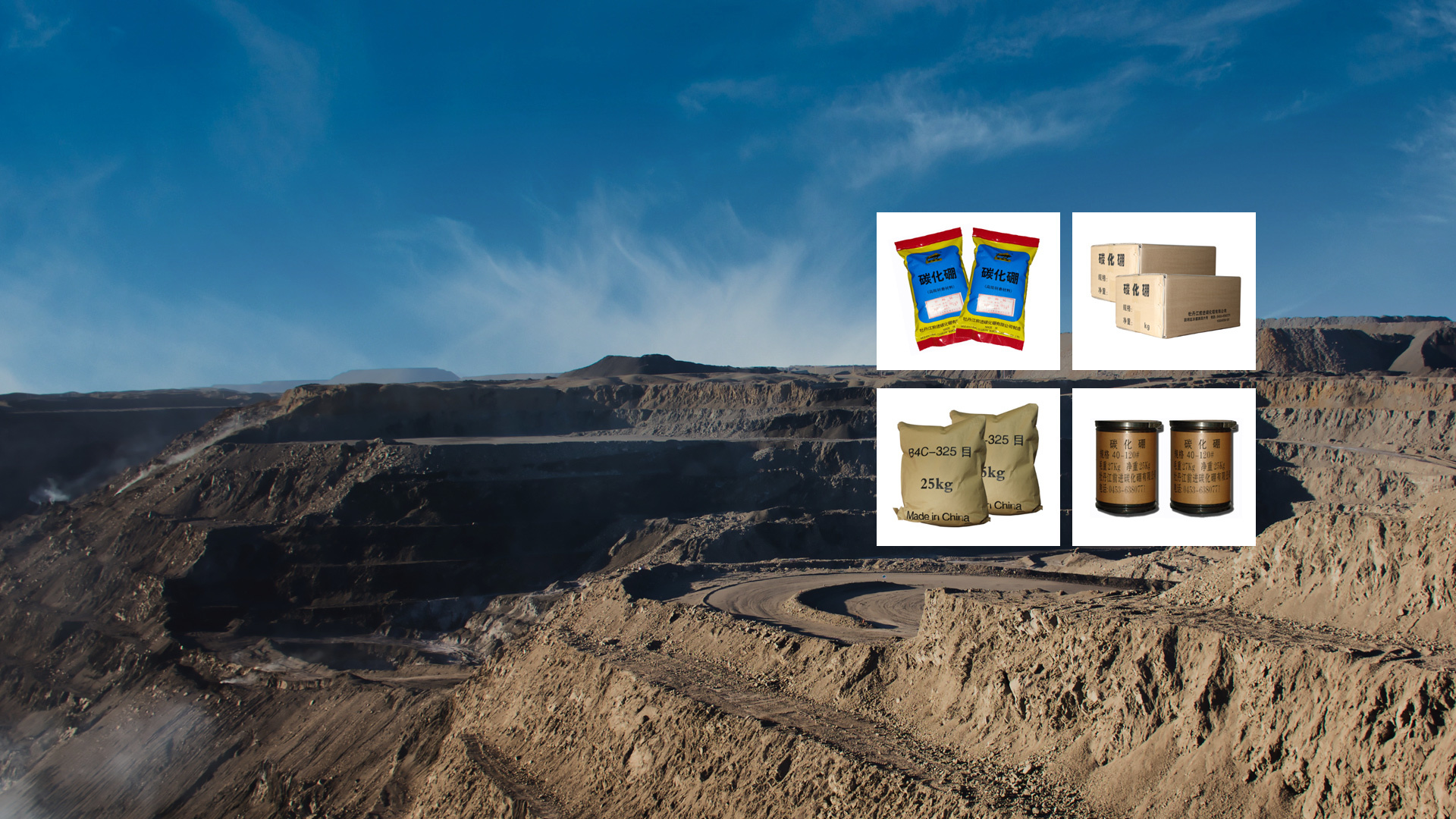
Boron carbide finished product

Boron carbide finished product

Boron carbide finished product

Boron carbide (BORONCARBIDE), also known as "black diamond," has the molecular formula B4C and typically appears as a grayish-black fine powder. It is one of the three hardest materials known (the other two being diamond and cubic boron nitride), making it ideal for use in tank armor, bulletproof vests, and numerous industrial applications. Its Mohs hardness rating is 9.3.

MORE

Boron carbide

Boron carbide

Boron carbide

Boron carbide (BORONCARBIDE), also known as "black diamond," has the molecular formula B4C and typically appears as a grayish-black fine powder. It is one of the three hardest materials known (the other two being diamond and cubic boron nitride), and is widely used in tank armor, bulletproof vests, and numerous industrial applications. Its Mohs hardness rating is 9.3.

MORE

Boron carbide

Boron carbide

Boron carbide

Boron carbide (BORONCARBIDE), also known as "black diamond," has the molecular formula B4C and typically appears as a grayish-black fine powder. It is one of the three hardest materials known (the other two being diamond and cubic boron nitride), making it ideal for use in tank armor, bulletproof vests, and numerous industrial applications. Its Mohs hardness rating is 9.3.

MORE

Boron carbide

Boron carbide

Boron carbide

Boron carbide (BORONCARBIDE), also known as "black diamond," has the molecular formula B4C and typically appears as a grayish-black fine powder. It is one of the three hardest materials known (the other two being diamond and cubic boron nitride), making it ideal for use in tank armor, bulletproof vests, and numerous industrial applications. Its Mohs hardness rating is 9.3.

MORE

Carbon boride in a paper bag

Carbon boride in a paper bag

Carbon boride in a paper bag

Boron carbide (BORONCARBIDE), also known as "black diamond," has the molecular formula B4C and typically appears as a grayish-black fine powder. It is one of the three hardest known materials (the other two being diamond and cubic boron nitride), making it ideal for use in tank armor, bulletproof vests, and numerous industrial applications. Its Mohs hardness rating is 9.3.

MORE

Boron carbide in barrels

Boron carbide in barrels

Boron carbide in barrels

Boron carbide (BORONCARBIDE), also known as "black diamond," has the molecular formula B4C and typically appears as a grayish-black fine powder. It is one of the three hardest materials known (the other two being diamond and cubic boron nitride), making it ideal for use in tank armor, bulletproof vests, and numerous industrial applications. Its Mohs hardness rating is 9.3.

MORE
haoma

Product

Advantage

01

Equipment Advantages

The company employs modern equipment and instruments to continuously monitor and inspect product quality and particle size. Additionally, the company has successfully achieved ISO 9001-2000 certification for its quality management system—another solid guarantee of our ability to produce high-quality boron carbide products.

02

Technological Advantages

The company has invested in developing and successfully putting into production a new type of smelting furnace. Accompanied by a state-of-the-art dust removal system, the recovered dust has not only reduced costs for the company but also boosted its economic efficiency—further solidifying the company’s foundation for transitioning toward environmentally friendly operations.

03

Talent advantage

The company currently employs over 200 people. Among them, approximately 20 percent are college graduates, including 4 senior engineers, 12 engineers, and 25 technicians. Notably, all employees involved in boron carbide production have more than 10 years of experience in the field.

Sichuan Branch Factory


50 years of industry production experience

Mudanjiang Qijin Boron Carbide Co., Ltd. was established in 1975 and is currently China's leading specialized enterprise producing boron carbide.


Strict quality standards

The company adheres to the principle: "Quality is the foundation for a business's survival." Thanks to the relentless efforts of our leadership team and dedicated employees, we have successfully achieved ISO 9001:2000 certification for our quality management system.


"Uphold Contracts and Value Integrity"

The company invested in the independent development of a new type of smelting furnace, which has now been successfully put into production and is already in use. The recovered dust has not only reduced costs for the company but also boosted its economic efficiency—further solidifying the company’s foundation as it moves toward environmentally friendly operations.

Jinan Taihao Petrochemical Accessories Co., Ltd.

NEWS

2020-10-19

Contact Letter Regarding the Name Change of Mudanjiang Qianjin Boron Carbide Co., Ltd.

Dear Valued Partner, Thank you very much for your continued trust and support of our company over the years! Due to business expansion needs, "Mudanjiang Qianjin Boron Carbide Co., Ltd." has completed its relocation on August 15, 2020, moving entirely to Shixian County, Sichuan, and officially rebranded as "Shixian Baisen Technology Abrasives Co., Ltd." The new facility has been fully operational since that date. We’d like to reach out to inform you of this transition and provide further details: 1. As a result of the relocation, you may have some concerns regarding the product quality, service standards, or pricing of "Shixian Baisen Technology Abrasives Co., Ltd." Rest assured, we are committed to maintaining the highest product quality while offering competitive pricing. For specific details on pricing discounts, please feel free to contact Ms. Huang Qian (General Manager, Tel: 13069799077). 2. Below are the relevant details of "Shixian Baisen Technology Abrasives Co., Ltd.": Company Name: Shixian Baisen Technology Abrasives Co., Ltd. Unified Social Credit Code: 915118243144104086 Company Address: Zhuma Industrial Park, Huilong Township, Shixian County Legal Representative: Mr. Huang Baisen Bank Account Information: - Bank: Agricultural Bank of China, Shixian County Branch - Account Number: 22544101040016478 - Bank Swift Code: 103677554411 - Phone Number: 0835-8885118 We look forward to continuing our partnership and serving you even better in the future. Please don’t hesitate to reach out if you have any questions or require further information. Best regards, [Your Name] [Your Position] [Your Company]

2018-03-27

Applications of boron carbide

Controlling Nuclear Fission Boron carbide can absorb a large number of neutrons without forming any radioactive isotopes, making it an ideal neutron absorber in nuclear power plants—precisely because neutron absorbers are crucial for regulating the rate of nuclear fission. In nuclear reactors, boron carbide is typically fabricated into controllable rod-shaped forms; however, to maximize surface area for enhanced absorption efficiency, it’s sometimes processed into a powdered form. During the 1986 Chernobyl nuclear disaster, a frontline aviation regiment stationed in Tuzhuk, Russia, was fully mobilized and dispatched eastward toward Chernobyl. Helicopters ranging from Mi-8 to Mi-26 models were immediately deployed to carry out aerial delivery missions. As the supply of boron carbide dwindled, conventional sand was reintroduced to the operation. Fortunately, as the sand dispersal progressed, flight operations became significantly easier. After helicopters had dropped nearly 2,000 tons of boron carbide mixed with sand, engineers finally confirmed that the chain reaction inside the reactor had been successfully halted. By the end of the mission, the total weight delivered by helicopters reached an impressive 5,000 tons.[1] Abrasive Material Due to its exceptional hardness—surpassing even silicon carbide or tungsten carbide—boron carbide has long been utilized as a coarse abrasive material. Although its high melting point makes it challenging to cast into intricate shapes, boron carbide can be shaped into simple forms through high-temperature powder metallurgy processes. It is widely employed for grinding, polishing, drilling, and cutting hard materials such as cemented carbides and precious gems. Coating Applications Boron carbide also serves as a versatile ceramic coating for military vessels and helicopters, offering lightweight protection while effectively resisting armor-piercing projectiles and providing robust thermal insulation against heat penetration. This unique combination of lightweight properties and superior protective capabilities makes it an invaluable material for enhancing the durability and performance of naval and airborne platforms. Nozzle Manufacturing In the defense industry, boron carbide is prized for crafting high-performance nozzles used in firearms and artillery systems. Its extraordinary hardness, unmatched wear resistance, and chemical inertness—combined with its ability to withstand extreme temperatures and pressures—make it an ideal choice for applications where durability and precision are paramount. With a density exceeding 2.46 g/cm³ and a microhardness surpassing 3,500 kgf/mm², boron carbide nozzles exhibit exceptional resistance to abrasion and wear. Moreover, they maintain structural integrity under both high and low temperatures, as well as at elevated pressures. Given these outstanding characteristics, boron carbide nozzles are poised to gradually replace traditional abrasive tools made from materials like cemented carbides, tungsten steel, silicon carbide, silicon nitride, alumina, and zirconia. Other Applications Beyond its use in abrasives and coatings, boron carbide plays a vital role in the production of metal borides. It is also essential in refining sodium borates, manufacturing boron alloys, and supporting specialized welding techniques.

2020-10-19

The fundamental properties, applications, and chemical stability of boron carbide

Boron carbide crystals exhibit a rhombohedral structure, with their lattice belonging to the D3d5-R3m space group. As shown in Figure 7, this rhombohedral structure can be described as a cubic unit cell extended along the body diagonal direction, forming highly regular icosahedra at each corner. Parallel to the body diagonal lies the c-axis, which follows a hexagonal symmetry and consists of linear chains composed of three boron atoms interconnected with adjacent icosahedra. Consequently, the unit cell contains 12 icosahedral orientations, with three of these orientations aligned along the linear chains. If we consider the boron atoms as occupying positions dictated by the icosahedral geometry, while the carbon atoms reside within the linear chains, the chemical formula derived from this arrangement is B4C. --- ### 1. Fundamental Properties and Applications of Boron Carbide #### 1) Low Density Boron carbide boasts a relatively low density of 2.52 g/cm³. Within its homogenous phase range, the relationship between density and carbon content can be expressed empirically by Equation (9): \[ \rho = 2.4224 + 0.00489 \times C\% \quad (9) \] Due to its low density, even when achieving high levels of densification, boron carbide retains excellent mechanical properties such as high strength and exceptional hardness. This makes it an ideal material for lightweight armor applications, significantly reducing the weight of vehicles like tanks while also improving fuel efficiency. #### 2) Hardness and Wear Resistance Boron carbide is renowned for its extraordinary hardness and outstanding wear resistance. In its homogenous phase region, the Vickers hardness of B4C increases with rising carbon content. For instance, at a carbon concentration of 10.6%, the hardness reaches 29.1 GPa; further increasing the carbon content to 20% elevates the hardness to as high as 37.7 GPa. Remarkably, even at elevated temperatures, boron carbide maintains impressive hardness levels—exceeding 30 GPa. The temperature dependence of hardness can be modeled using Equation (10): \[ H = H_0 - \exp(-aT) \quad (10) \] Here, \( H_0 \) represents the hardness at room temperature, \( T \) denotes the temperature, and \( a \) is a constant influenced by the carbon content. This equation is applicable across a temperature range of 20°C to 1700°C. It’s worth noting that boron carbide ranks among the hardest materials globally, second only to diamond and cubic boron nitride (c-BN). Moreover, the wear resistance of boron carbide improves as temperature rises. Between 20°C and 1400°C, the coefficient of friction decreases with increasing temperature, dropping sharply to around 0.05 at 1400°C. These exceptional tribological properties have led to its widespread use in high-wear-resistant applications, such as sandblasting nozzles, diamond-coated nozzles for waterjet cutting systems, and other critical components in military equipment like tank and aircraft armor [39, 40]. With advancements in precision machining technologies driving demand for ultra-hard materials, boron carbide continues to gain prominence. In recent years, its usage has steadily increased, particularly in industries requiring advanced grinding techniques. Additionally, boron carbide is increasingly employed for grinding hard alloys, ceramics, and gemstones—serving as both free abrasive particles and ultrasonic machining media for processing these exceptionally tough materials. However, compared to regions like Europe and North America, China currently uses boron carbide sparingly in these applications. #### 3) Thermal Expansion and Specific Heat Capacity Boron carbide exhibits a melting point of 2450°C and a boiling point of 3000°C. Its coefficient of thermal expansion is 5.73 × 10⁻⁶/°C within the temperature range of 28°C to 1770°C. The specific heat capacity can be calculated using Equation (11): \[ C = 22.99 + 5.40 \times 10^{-3}T - 10.72 \times 10^5T^{-2} \quad (11) \] --- ### 2. Chemical Stability Boron carbide is one of the most chemically stable compounds known. Below 600°C, it resists oxidation under normal conditions. However, when exposed to temperatures above 600°C, a thin layer of boron oxide (B₂O₃) forms on its surface, effectively preventing further oxidation of the bulk material. As a result, boron carbide is now widely utilized as an anti-oxidant additive in refractory materials. At room temperature, boron carbide remains inert to most chemical reagents. Yet, at temperatures exceeding 800°C, it reacts with bromine to form tribromides. At even higher temperatures, boron carbide undergoes reactions with metal oxides, yielding metal borides and carbon monoxide. Notably, the resulting FeB films demonstrate remarkable microhardness values, reaching up to 24 GPa, along with exceptional wear resistance. These unique properties make boron carbide a valuable material for boriding steel and alloy surfaces, enhancing their durability and performance.

2020-10-19

The Fundamental Properties, Synthesis, and Performance of Boron Carbide

Boron carbide is a general term for compounds composed of carbon (C) and boron (B), forming two distinct types—B4C and B6C—depending on the specific reaction conditions. When referring to "boron carbide" without further specification, it typically means B4C. ### I. Fundamental Properties of Boron Carbide B4C belongs to the trigonal crystal system, with each unit cell containing 12 boron atoms and 3 carbon atoms. Notably, the carbon atoms within the unit cell are arranged along the body diagonals, leaving them in a highly mobile state that allows them to be readily replaced by boron atoms, leading to the formation of substitutional solid solutions. In some cases, these carbon atoms may even detach from the lattice, resulting in high-boron compounds with inherent structural defects. B4C has a molecular weight of 52.25 g/mol, with carbon accounting for 21.74% and boron making up 78.26% by mass. It typically appears as a grayish-black material, with a density of 2.519 g/cm³ and a Mohs hardness of 9.36. Its microhardness is around 50 GPa, second only to diamond and cubic boron nitride. As a result, B4C powder exhibits exceptional abrasive capabilities, achieving grinding efficiencies comparable to 60%-70% of those attained by diamond, while surpassing SiC by 50% and being 1-2 times more effective than corundum-based abrasives. The melting point of B4C is 2450°C (decomposition occurs at this temperature). Between 1000°C, its coefficient of thermal expansion is approximately 4.5 × 10⁻⁶/°C. At 100°C, its thermal conductivity is 121.4 W/m·K, dropping to 62.79 W/m·K at 700°C. Primarily used as an abrasive material, hot-pressed B4C products are also employed in manufacturing wear-resistant and heat-resistant components. In the refractory industry, B4C serves mainly as an additive—for instance, when incorporated into carbon-bonded refractories, it acts as an antioxidant; when added to unshaped materials, it enhances the green strength and improves resistance to chemical attack. ### II. Composition and Typical Properties of Boron Carbide In industrial applications, the most common method for producing B4C powder involves reducing boron trioxide with excess carbon: \[ 2\text{B}_2\text{O}_3 + 7\text{C} \rightarrow \text{B}_4\text{C} + 6\text{CO} \uparrow \] This synthesis reaction can be carried out either in a resistance furnace or an electric arc furnace. When using a resistance furnace, the mixture of boron trioxide (B₂O₃), carbon (C), and other additives is heated below the decomposition temperature of B4C, yielding a product with minimal free carbon content—though occasionally, it may still contain 1%-2% free boron. This method is considered superior due to its ability to produce higher-quality B4C. In contrast, when synthesizing B4C in an electric arc furnace, the extremely high temperatures cause B4C to decompose into a carbon-rich phase and elemental boron around 2200°C. Additionally, the high heat leads to significant evaporation of boron, resulting in a final product with a much higher free carbon content—often ranging from 20% to 30%. Consequently, the quality of B4C produced via this method tends to be slightly lower compared to the resistance-furnace approach. When producing B4C in an electric arc furnace, typical raw materials include boric acid (containing over 92% boron), artificial graphite (with fixed carbon content exceeding 95%), and petroleum coke (containing at least 85% fixed carbon). Based on stoichiometric calculations derived from the reaction equation, the amount of boric acid added should exceed the theoretical requirement by about 2%, while artificial graphite and petroleum coke each account for roughly 50% of the total carbon input. To ensure optimal results, these materials are then mixed thoroughly in a ball mill before being fed into the electric arc furnace, where the reduction and carburization processes occur at temperatures between 1700°C and 2300°C. Finally, the resulting molten mass undergoes a series of refining steps—including sorting, washing, crushing, grinding, acid leaching, and sedimentation-based grading—to yield B4C powders of various particle sizes.

Helping you find the right boron carbide solution for your needs

Contact us

If you'd like to learn more about our products, please leave your email, and we'll reach out to you during business hours.

%{tishi_zhanwei}%